A permanent display installation involves decisions that extend far beyond screen dimensions and visual resolution. Building architecture, audience distance, maintenance arrangements, and operating conditions all influence how a display performs over time.
Selecting suitable LED video panels requires a technical assessment of the installation environment, particularly when the screen will remain in place for years. Ledman develops indoor display solutions that address structural adaptability and protection, offering useful reference points for understanding the factors behind a reliable fixed-screen configuration.
Selecting Pixel Pitch Based on Viewing Distance
Pixel pitch describes the distance between the centers of two neighboring LED pixels, usually measured in millimeters. A smaller pitch provides greater pixel density, allowing viewers to see finer details at relatively short distances. Larger pitches are generally suitable for installations where audiences remain farther away from the screen.
Viewing distance should be considered alongside the physical dimensions of the display. A conference room screen viewed from a few meters requires different specifications from a large installation in an airport terminal. If pixel pitch is unnecessarily large, text edges and detailed images may appear less defined to nearby viewers.
Content requirements introduce another variable into the decision. Screens displaying financial figures, presentations, product photography, or detailed diagrams often benefit from finer pixel spacing. By contrast, promotional videos and large-format graphics viewed from across spacious environments may not require the same pixel density. The intended audience experience should determine the specifications of LED video panels, rather than resolution figures alone.
Understanding Cabinet Depth and Structural Requirements
Cabinet depth affects how a display integrates with its surrounding architecture. Shallow cabinets can be useful when installation space is limited or when the screen needs to sit close to an existing wall. Deeper structures may provide additional internal space for electrical components, ventilation, and cable management.
Weight distribution is equally important during project planning. A permanent display places continuous loads on its supporting structure, so the wall material, mounting framework, and cabinet weight must be assessed together. Large installations may require reinforced steel structures or customized support systems to distribute pressure across multiple fixing points.
Thermal management also deserves attention. LED modules, power supplies, and receiving cards generate heat during operation, while insufficient airflow can contribute to component deterioration. Cabinet design should provide suitable heat dissipation according to the installation environment, especially in enclosed spaces where natural ventilation is restricted.
Comparing Maintenance Access and Protection Features
Maintenance access determines how technicians inspect and service display components after installation. Front maintenance allows certain modules and internal parts to be accessed from the viewing side, making it useful when the rear of the screen is positioned close to a wall. Rear maintenance provides access from behind the cabinet but requires additional clearance and a suitable service area.
The surrounding environment influences which maintenance arrangement is practical. Shopping centers, meeting rooms, and retail interiors may have limited space behind the display, while dedicated control rooms can accommodate rear-access structures. Maintenance planning should also account for replacement modules, power supplies, cables, and the tools required for routine inspection.
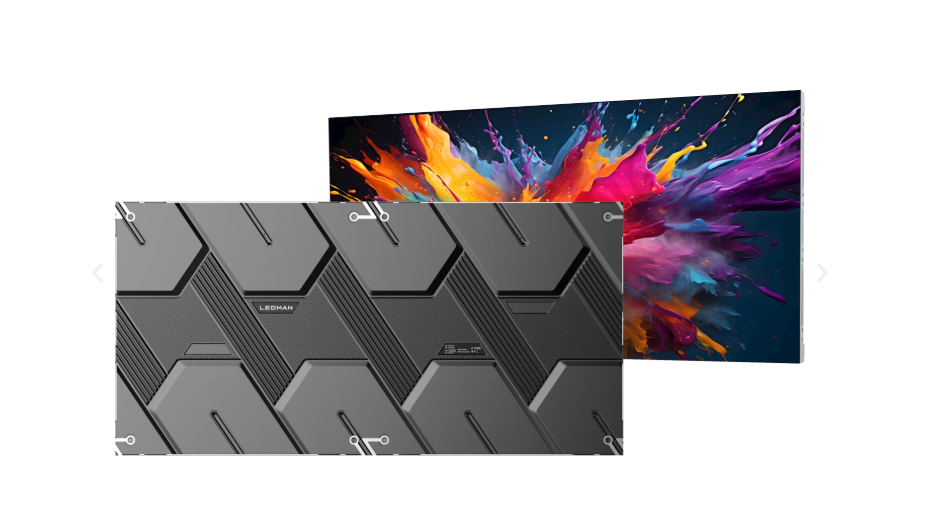
Protection features contribute to operational stability by reducing the impact of dust, moisture, and physical contact. Ledman’s X Series incorporates a three-layer protection design intended to reduce LED lamp bead failure during operation and support consistent visuals across fixed display installations. This construction highlights the importance of protective measures when evaluating LED video panels for long-term indoor use.
Choosing a Suitable Mounting System for Permanent Displays
Mounting systems connect the cabinet structure to the building and influence the final screen alignment. Wall-mounted configurations are frequently used in retail spaces, conference rooms, and exhibition areas, while suspended structures may suit venues with limited wall space. Each arrangement requires a load assessment based on cabinet dimensions, total weight, and the supporting surface.
Flatness becomes particularly important when multiple cabinets form one large display. Minor differences in cabinet positioning can create visible lines, uneven edges, or inconsistencies across the screen surface. Adjustable mounting brackets and accurately measured support structures help installers control cabinet alignment during assembly.
Future maintenance and renovation plans should also influence mounting decisions. A display that is difficult to remove or access may increase service time when components require replacement. Appropriate clearance, cable routing, ventilation space, and structural accessibility can make permanent installations easier to manage throughout their operating life.
Conclusion
A successful fixed display project begins with matching technical specifications to the actual conditions of the installation site. Pixel pitch determines how clearly content appears at different viewing distances, cabinet depth affects architectural integration, and maintenance access influences the practicality of future servicing. Mounting arrangements and protective construction then contribute to the stability of the overall system.
The evaluation of LED video panels should also consider operating schedules, content formats, environmental conditions, and long-term maintenance costs. Ledman reflects these considerations through indoor display solutions such as the X Series, which combines three-layer protection with installation flexibility and attention to screen flatness. A carefully planned configuration can provide a more consistent visual experience while making permanent display systems easier to maintain.