Lighting design involves more than selecting a suitable color temperature or calculating the number of fixtures required. The electrical architecture behind an installation can influence layout flexibility, brightness consistency, maintenance demands, and overall project costs.
For commercial designers and contractors, working with an experienced LED strip supplier can help clarify these technical considerations before installation begins. LEDIA Lighting provides solutions for different lighting applications, while the development of low-voltage LED systems continues to expand the possibilities for architectural, decorative, and functional illumination.
How Voltage Influences LED Strip Performance
Voltage selection affects how electrical energy travels along an LED strip. In conventional low-voltage installations, resistance within copper conductors causes voltage to decrease over distance. LEDs positioned farther from the power input may consequently receive less electrical energy, resulting in uneven brightness or visible color differences.
This issue becomes particularly relevant in installations featuring long continuous lighting runs. Traditional systems may require additional power injection points, thicker wiring, or multiple power supplies to maintain consistent output. Such arrangements can increase installation complexity, especially in concealed ceiling details, commercial shelving, and architectural profiles where wiring access is restricted.
Higher-voltage DC systems offer another approach to managing these challenges. 48 Volt LED strip lights can reduce current requirements for a given power level compared with lower-voltage alternatives of equivalent wattage. Lower current can help reduce conductor losses, although cable dimensions, installation distance, and electrical load must still be calculated carefully.
Where Continuous LED Strip Lighting Adds Value
Architectural interiors frequently incorporate linear illumination to emphasize structural features without introducing visually bulky fixtures. Recessed ceiling channels, wall coves, staircase edges, and cabinet undersides are common locations where continuous LED strips create a subtle visual connection between different areas.
Retail environments present another useful application. Display shelves, product niches, and illuminated signage benefit from consistent light distribution because uneven brightness can distract from merchandise presentation. A uniform linear source also helps maintain visual continuity across extended display surfaces, particularly in stores with repeated shelving arrangements.
Hospitality projects often require a balance between decorative atmosphere and practical illumination. Hotel corridors, restaurant counters, reception desks, and decorative ceiling structures can incorporate concealed linear lighting to establish different spatial moods. Designers should consider diffusion materials, mounting depth, and viewing angles to prevent individual LED points from becoming distracting.
For installations involving extended runs, 48 Volt LED strip lights may provide a practical electrical configuration, depending on the product’s rated length and power requirements. Before specifying a system, project teams should examine maximum run length, power consumption, connection methods, and the manufacturer’s voltage-drop data rather than assuming every high-voltage strip supports the same installation distance.
Technical Factors Behind Long-Run LED Installations
Voltage stability is only one part of successful linear lighting design. Thermal management also affects LED performance, particularly in high-output applications where chips generate considerable heat during extended operation. Aluminum profiles can help transfer heat away from the strip, while also providing mechanical protection and a defined mounting surface.
LED density and optical construction determine how smoothly the light appears along a surface. Closely spaced chips generally reduce visible gaps, but the final result also depends on diffuser quality, installation distance, and the depth of the lighting channel. COB technology integrates LED chips closely along the strip, producing a more continuous appearance than conventional widely spaced LED packages.
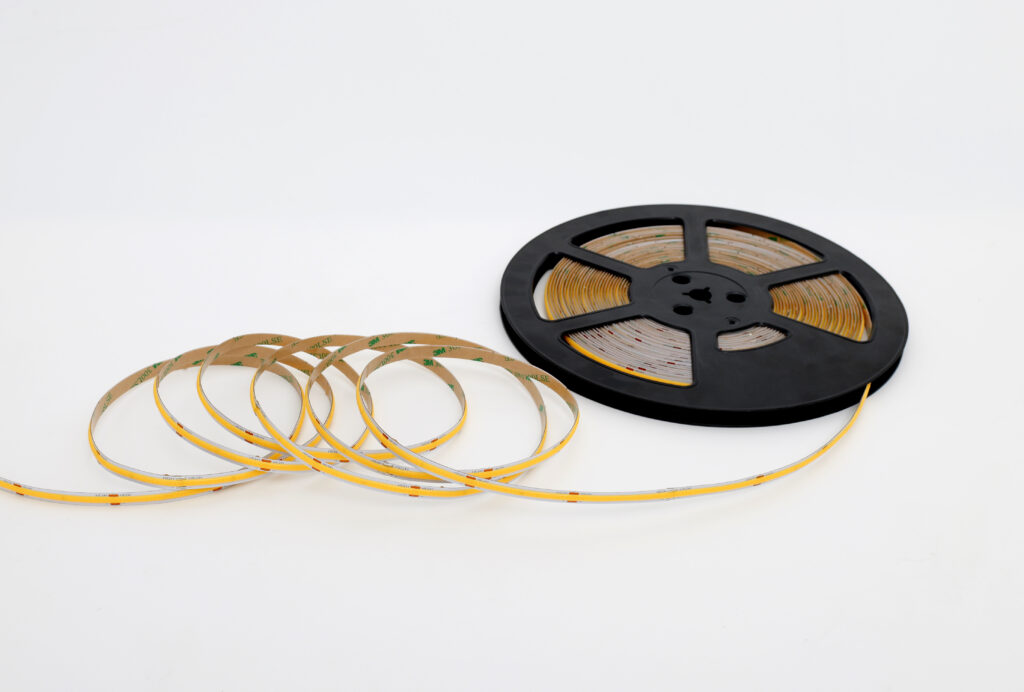
The 20M No Voltage Drop COB Strip from LEDIA Lighting illustrates this approach through three specified features: a 20-meter no-voltage-drop design, a dot-free and homogeneous linear light output with high brightness, and a reinforced backing structure that protects the chips while strengthening heat dissipation. These characteristics make the model relevant to projects requiring extended linear illumination, although installation teams should still consult its electrical specifications and operating conditions before finalizing a design.
Power supply selection deserves similar attention. Its output voltage must match the strip’s rated voltage, while its wattage capacity should accommodate the connected load and appropriate operating margin. Incorrect matching can cause unstable operation, excessive heat, or premature component failure.
Planning Procurement, Installation, and Maintenance
Project planning becomes more efficient when electrical calculations are completed before materials are ordered. Installers should determine the total strip length, rated power per meter, supply capacity, cable specifications, and connection layout. These figures help identify potential limitations before ceiling structures or cabinetry conceal the wiring.
Product documentation is another important part of procurement. A qualified LED strip supplier should be able to provide relevant information about voltage, power consumption, color temperature, cutting intervals, environmental protection ratings, and compatible accessories. Such details allow contractors to compare products according to actual project requirements instead of relying solely on appearance or advertised brightness.
Maintenance planning also deserves attention during the design stage. Accessible power supplies, replaceable connection components, and properly ventilated mounting channels can simplify future servicing. For installations in kitchens, bathrooms, or outdoor settings, the IP rating and sealing method should correspond to the expected exposure to moisture and dust.
The application of 48 Volt LED strip lights also requires appropriate electrical protection. Although 48V DC is commonly used in low-voltage lighting systems, it should not be treated as risk-free. Proper polarity, suitable connectors, short-circuit protection, and compliance with applicable electrical codes remain essential considerations.
Conclusion
The potential of linear LED lighting extends well beyond decorative accents. Its application in architectural structures, retail displays, hospitality interiors, and extended commercial installations depends on a combination of electrical design, optical quality, and thermal performance. Long-run configurations can simplify certain layouts, but their actual suitability must be assessed against measurable product specifications and installation conditions.
LEDIA Lighting contributes to this product category with solutions such as its 20M No Voltage Drop COB Strip, which combines continuous illumination with a reinforced backing structure. By evaluating the technical requirements of each project and consulting a knowledgeable LED strip supplier, designers and contractors can develop lighting systems that balance visual consistency, installation practicality, and long-term operational needs.