The modern semiconductor landscape is undergoing a rapid technological transformation, propelled by the computational demands of artificial intelligence, edge platforms, and cloud enterprise servers. As processing throughput escalates, memory subsystem architecture has become a decisive bottleneck determining overall system reliability, high-speed signal integrity, and system-level energy consumption.
Hardware designers must balance stringent power budgets with dynamic transient performance across complex memory sub-circuits. Keeping pace with volatile dram market trends requires engineering teams to design resilient power delivery networks while maintaining supply chain adaptability from early prototyping to volume manufacturing.
Analyzing Key Shifts in DRAM Market Trends
Global semiconductor fabrication facilities are increasingly reallocating production lines toward specialized high-bandwidth memory and dense server modules. This structural realignment leaves conventional dynamic random-access memory facing tighter factory allocation, periodic spot price volatility, and fluctuating lead times across consumer and industrial sectors.
While enterprise workloads rapidly adopt advanced DDR5 architectures, embedded ecosystems continue to rely heavily on established DDR3, DDR3L, and DDR4 platforms. These resilient memory formats remain indispensable for automotive telematics, networking gateways, industrial automation controllers, and medical instrumentation where board redesign costs remain prohibitive.
Designing around these complex supply dynamics forces procurement teams to monitor wafer fab capacities closely. Because memory availability directly dictates hardware production schedules, engineers must carefully evaluate auxiliary chips, such as termination regulators and power management integrated circuits, that stabilize these sensitive memory rails.
System designers cannot afford printed circuit board respins caused by unpredictable component availability or sudden lifecycle transitions. Consequently, selecting versatile power management chips capable of interfacing across multiple memory generations provides long-term operational resilience and simplifies inventory management during unpredictable allocation cycles.
Technical Architecture and Functionality of the TPS51200DRCR
Meeting the tight voltage tolerances of double data rate architectures requires specialized power regulation. The TPS51200DRCR serves as an active sink and source DDR termination regulator, specifically engineered to manage memory bus termination voltages with high precision and low external component overhead.
Manufactured by Texas Instruments, this linear regulator delivers up to 3 A continuous output current while sinking and sourcing current seamlessly. The device supports 2.5-V and 3.3-V bias supply rails, while its VLDOIN input operates over a range of 1.1 V to 3.5 V, making it suitable for low-voltage DDR termination applications.
The device integrates built-in droop compensation to minimize output capacitance requirements, maintaining complete transient stability with an output capacitance of merely 20 µF. This capability lowers total bill of materials expenditure while conserving precious board layout space in compact computing appliances and telecommunication rack cards.
High-speed data switching introduces significant bus ripple, which demands transient response times from the power stage. The chip incorporates remote voltage sensing through its VOSNS pin, allowing the regulator to monitor the termination voltage at the load and compensate for voltage drops caused by PCB trace resistance.
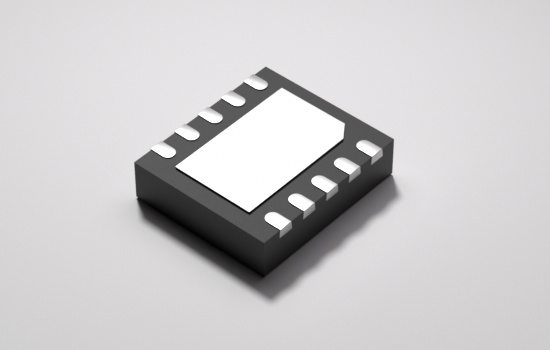
Thermal management is another core asset of the regulator architecture. Housed in a thermally efficient 10-pin VSON package with an exposed thermal pad, the component operates reliably between -40°C and 85°C, ensuring dependable heat dissipation even during continuous high-load data switching events in dense chassis.
Furthermore, the integrated buffered reference output tracks half of the reference input voltage to support VTT regulation. The device is designed for DDR2, DDR3, and DDR3L termination applications.
Managing Memory Subsystems Amid Supply Chain Volatility
Achieving reliable hardware performance requires matching robust silicon specifications with proactive component sourcing strategies. As ongoing dram market trends influence factory lead times and secondary market pricing, hardware manufacturers must ensure their critical power components remain continuously accessible throughout multi-year product lifecycles.
Engineers regularly specify the TPS51200DRCR because its multi-standard DDR compatibility protects hardware platforms against sudden memory chip substitutions. When memory densities or manufacturers shift due to supply allocation constraints, the regulator maintains steady voltage rails without requiring costly redesigns of the primary power stage.
Supply chain friction often intensifies during major industry transitions, creating localized shortages for peripheral analog semiconductors and power regulators. When surface-mount assembly lines face halted production due to missing voltage controllers, hardware businesses require dependable distribution partners with broad market access and established channels.
To address these procurement bottlenecks, Unibetter distributes a wide range of electronic components across industrial automation, automotive computing, enterprise networking, and consumer electronics sectors. This expansive scope enables purchasing departments to consolidate complex bills of materials across multiple active semiconductor categories and passive devices.
Securing Authentic Components and Mitigating Risk
Procurement teams face intense challenges when attempting to secure specialized integrated circuits during periods of global supply tightening. Gray market channels and unverified brokers frequently introduce counterfeit, substandard, or remarked semiconductors that fail prematurely and jeopardize the reliability of finished electronic assemblies.
For analog power devices, reliable sourcing and electrical compliance are essential to product performance. Unibetter works with franchised suppliers and verifies incoming components against manufacturer specifications and traceability records.
Its flexible sourcing support also gives customers more options when market shortages push prices higher, helping control procurement costs without overlooking technical requirements.
Through its global sourcing network and inventory management processes, Unibetter helps manufacturing partners identify alternative component supply options when factory lead times are extended. This comprehensive sourcing infrastructure allows hardware organizations to adapt swiftly when semiconductor fabricators prioritize enterprise server memory over general-market analog power devices.
Building Resilient Memory Systems
Modern electronic engineering requires a balanced methodology bridging high-performance circuit architecture with proactive supply chain execution. When developing high-density memory subsystems, engineering teams must implement robust termination regulation schemes that guarantee tight voltage tracking, minimal thermal dissipation, and dynamic transient stability across diverse operational modes.
At the same time, volatile market cycles make franchised component procurement an essential pillar of manufacturing success. Partnering with qualified distributors helps hardware teams maintain supply continuity, reduce counterfeit risks, and obtain power management components supported by appropriate sourcing and quality verification procedures.