Detecting Vibrio cholerae and identifying a named serogroup answer related questions at different levels. Molecular laboratories assessing their contribution to cholera disease diagnosis need to establish which information the requested examination must provide.
A reagent description can include organism detection, differentiation within that organism, and conditions governing the specimen entering the method. Kit selection becomes more specific once those analytical questions are separated from the broader clinical interpretation of the finding.
Separate Organism Detection from Serogroup Information
An organism target asks whether the assay detects its selected genetic material, whereas a serogroup target adds a particular classification. These outputs can coexist within a molecular procedure without becoming interchangeable. A general detection label alone leaves the laboratory unable to tell whether the requested O1 or O139 distinction will be available.
Selection of a Vibrio cholerae test kit can therefore start with a proposed result statement. The statement identifies the organism being investigated and any separate serogroup information required. Comparing that statement with the assay’s intended output exposes missing coverage before instrument speed or reagent quantities influence the purchasing discussion.
For cholera disease diagnosis, PCR supplies an observation about the material tested under the method’s conditions. Amplification of selected sequences produces evidence for the included targets; it does not independently describe every feature of the organism. A serogroup finding consequently has a narrower meaning than complete strain characterisation, and its role remains tied to the question originally assigned.
Trace Multiplex Signals to Their Assigned Questions
Within a multiplex reaction, distinguishable target signals carry different pieces of information from the same prepared material. Their interpretation depends on the assay’s design and rules for assigning observations to targets. Combining reactions in one procedure preserves useful distinctions only if the resulting findings retain their corresponding identities.
PCR copies a selected DNA region through repeated temperature changes that separate strands, permit primer binding and support extension. Detection chemistry associates the accumulating product with a fluorescent observation. A multiplex design must keep the included observations distinguishable under its supported conditions, which is why the assay programme and signal assignments belong together during technical assessment.
A laboratory examining a Vibrio cholerae test kit can follow this relationship through the expected output. Organism detection establishes one finding, while O1 and O139 differentiation addresses the named serogroup questions. Neither the number of signals nor the use of multiplex chemistry establishes additional toxin, resistance or strain identification capabilities.
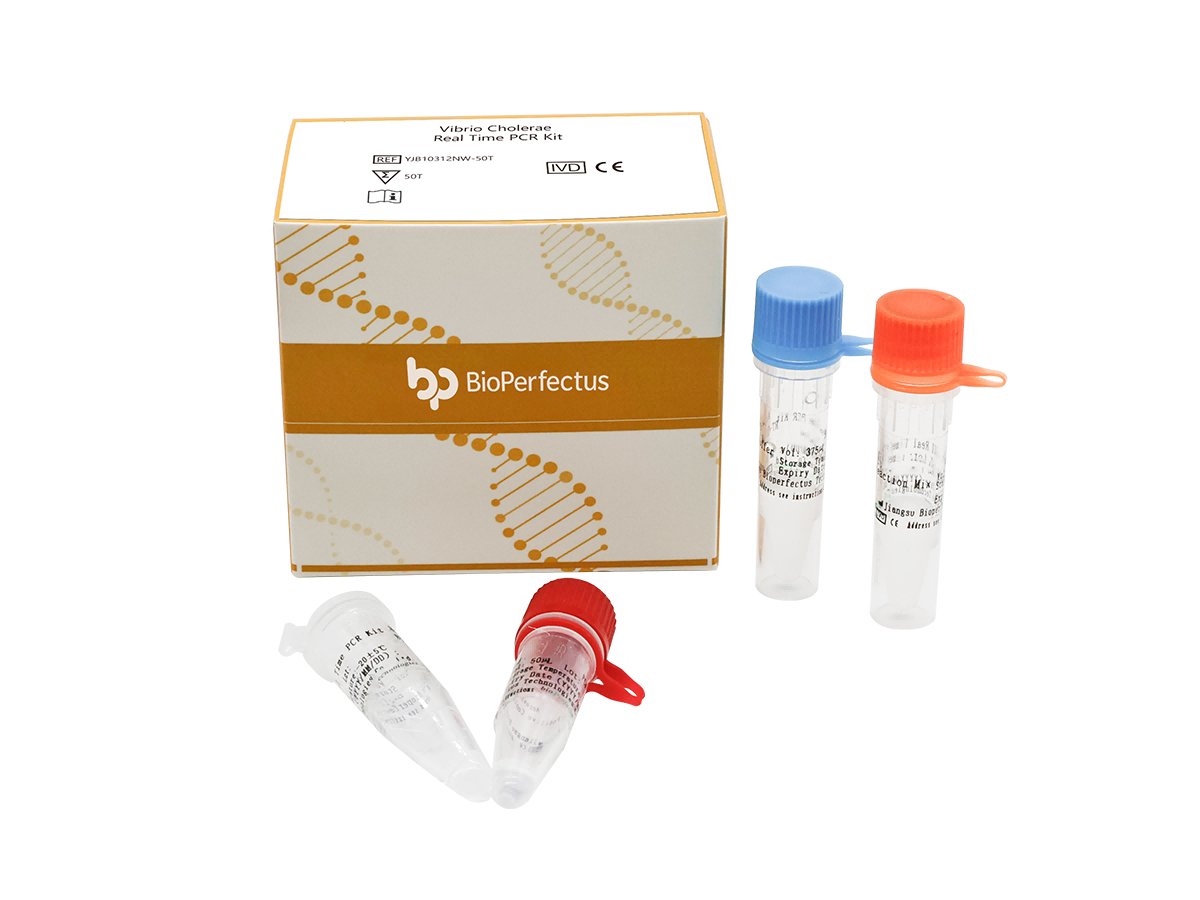
The distinction is explicit in the Vibrio cholerae Real-Time PCR Kit: BioPerfectus combines qualitative V. cholerae DNA detection with differentiation of O1 and O139 in human stool. Those stated outputs associate the product with defined molecular questions. The specimen qualification remains part of that association rather than disappearing behind the disease name.
Qualitative findings also differ from a concentration measurement. Fluorescence is the observed analytical signal, but a reported quantity needs an appropriately established quantitative method. Retaining the product’s stated detection and differentiation functions keeps the interpretation at the level actually supported by its intended use.
Examine Stool Preparation and Control Evidence Together
Stool introduces surrounding biological material alongside any target DNA, making preparation relevant to amplification. After DNA recovery, does the stool preparation still contain substances that alter the assay’s reaction chemistry? A method assessment consequently examines the accepted specimen and its preparation together, rather than treating purified liquid as proof that the original matrix was suitable.
Interpreting the BioPerfectus target findings also involves the separate evidence supplied by its included internal control. Its role follows the procedure’s interpretation requirements. An unacceptable control observation needs the corresponding investigation or action before an ordinary target conclusion is assigned; a satisfactory observation does not establish every aspect of specimen identity or collection quality.
The stated detection limit is five copies per reaction. That analytical figure concerns the assessed reaction and cannot establish how much target remained in an individual stool specimen before preparation. Loss during preparation and interference in amplification represent different concerns, so low target availability cannot be evaluated solely from the printed detection limit.
Place Operating Conditions Around the Intended Finding
Implementing the selected method requires an operating arrangement that maintains its analytical scope. Suitable reagents, supported equipment and the applicable handling procedure establish the conditions for producing the intended observation. Storage requirements apply to the kit; specimen transport and prepared DNA handling retain the requirements belonging to their own stages.
The instrument workflow for the BioPerfectus kit processes 96 samples in 62 minutes, with automatic result interpretation supported on STC real-time PCR systems. The timing describes that instrument workflow rather than the complete interval from collection to a reviewed clinical report. Preparation, control assessment and communication remain identifiable activities around the run.
An assessment of a Vibrio cholerae test kit can now connect the requested findings with the actual laboratory arrangement. Compatibility includes the supported programme and interpretation conditions, rather than an assumption that every available PCR instrument implements the same procedure. Any proposed change needs consideration at the point where it affects that analytical relationship.
Laboratory evidence contributes to cholera disease diagnosis through the information the chosen procedure can provide. Organism detection and named serogroup differentiation belong alongside the specimen and control conditions that make the observation interpretable. The selected method then has a precise object to detect and a defined level of information to report.