Why the Belgium–USA Air Freight Route Matters
Belgium has a strong position in European logistics because of its central location, developed transport infrastructure, and access to major cargo airports. For companies moving goods to the USA, this can make Belgium a useful departure point for urgent, high-value, or time-sensitive shipments.
Businesses can review route-specific information about air freight from Belgium to the USA here: https://aircgc.com/shipping-directions/air-freight-from-belgium-to-usa/
The route is relevant for many types of cargo, including pharmaceuticals, electronics, machine parts, fashion goods, product samples, and commercial goods needed for launches, repairs, or restocking. Air freight is usually more expensive than ocean freight, but it can help reduce the impact of delays when speed is critical.
When Air Freight Makes More Sense Than Ocean Freight
Air freight is not always the right option. For low-value goods with flexible deadlines, sea transport may be more cost-effective. But when a shipment has a strict delivery window, air cargo can help protect business continuity.
For example, a missing machine component may stop production. A delayed batch of medical goods may affect supply planning. Seasonal products may lose value if they arrive after the sales period. In these cases, the higher transport cost may be easier to justify because the real risk is not only the freight price, but also the cost of delay.
Key Documents Businesses Should Prepare
Documentation is one of the most common reasons international shipments slow down. For Belgium–USA air freight, businesses should prepare documents before cargo reaches the airport.
Typical paperwork may include:
- commercial invoice
- packing list
- air waybill
- product description
- customs classification details
- certificate of origin, if required
- import permits or compliance documents for regulated goods
Some products require extra attention. Pharmaceuticals, food-related goods, electronics, chemicals, and certain industrial components may need specific declarations or supporting documents. If information is incomplete or inconsistent, customs clearance can take longer than expected.
Customs Clearance Is Part of the Timeline
Many businesses think the main timeline is the flight itself. In reality, customs can have a major effect on delivery speed. Export procedures in Belgium, airline handling, import clearance in the USA, airport storage, and final delivery all form part of the total transit time.
This is why it is safer to think in terms of door-to-door delivery rather than flight duration alone. A cargo flight may be fast, but the shipment can still be delayed if the paperwork is unclear, duties and taxes are not planned for, or the receiver is not ready to accept the goods.
Packaging and Cargo Protection
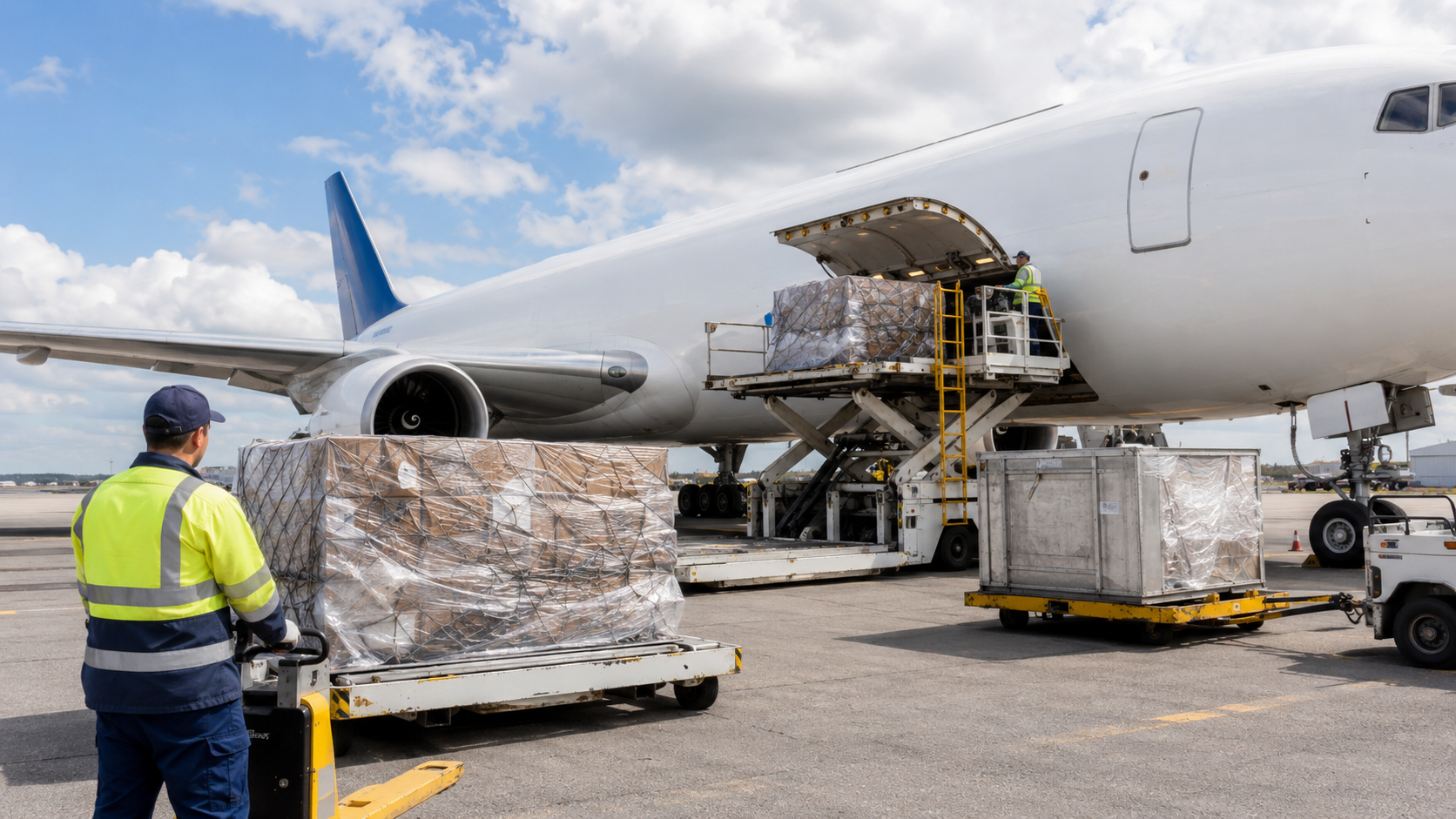
Air freight reduces time in transit, but it does not remove the need for proper packaging. Cargo may still pass through warehouses, airport terminals, loading equipment, aircraft holds, and trucks. Each handover creates a potential risk.
Fragile goods need cushioning and stable inner packaging. High-value electronics may need anti-static materials and secure outer protection. Pharmaceuticals or temperature-sensitive products may require insulated packaging, data loggers, or controlled conditions. Heavy or irregular cargo may need custom crates and clear handling instructions.
Good packaging protects the goods and also helps airport and customs teams handle the shipment correctly.
Tracking and Visibility During Transit
Modern air freight relies heavily on visibility. Tracking helps businesses understand where their shipment is and whether the schedule is still realistic. For urgent cargo, this matters because teams may need to prepare customs documents, warehouse staff, production lines, or customer delivery windows in advance.
Tracking is especially useful when cargo moves through several stages: pickup, airport acceptance, export clearance, flight, arrival, import clearance, and final-mile delivery. It does not eliminate risk, but it gives businesses more control when plans change.
Cost Factors in Belgium–USA Air Freight
Air freight cost depends on several variables. Weight and volume are important because airlines often calculate charges using either actual weight or volumetric weight. The type of cargo also matters. Dangerous goods, temperature-sensitive shipments, oversized items, or high-value cargo may require special handling.
Other cost factors can include pickup, export documentation, security screening, airline charges, fuel surcharges, customs brokerage, insurance, storage, and final delivery in the USA. Businesses should ask what is included in a quote and what may be charged separately.
How Businesses Can Prepare Before Shipping
Before booking air freight from Belgium to the USA, companies should check the cargo details, delivery deadline, customs requirements, packaging method, and receiver readiness. It is also useful to confirm whether the shipment needs insurance, special handling, temperature control, or priority service.
A clear plan reduces surprises. The shipper should know what is being transported, how it is packed, who is responsible at each stage, and what backup options exist if there is a delay.
Final Thoughts
Air freight from Belgium to the USA can be valuable for businesses that need fast, reliable movement of goods across the Atlantic. It is especially useful for urgent, valuable, sensitive, or deadline-driven cargo. Still, the flight is only one part of the process.
The best results come from preparation. Accurate documents, suitable packaging, customs planning, tracking, and clear communication can make the difference between a smooth delivery and an expensive delay. For businesses shipping internationally, air freight works best when it is treated as a complete logistics process, not just a fast transport option.

Jane Doe, founder of CaptionBio.co.uk, crafts heartfelt messages to inspire love, gratitude, and daily positivity. Let’s spread kindness through words!